
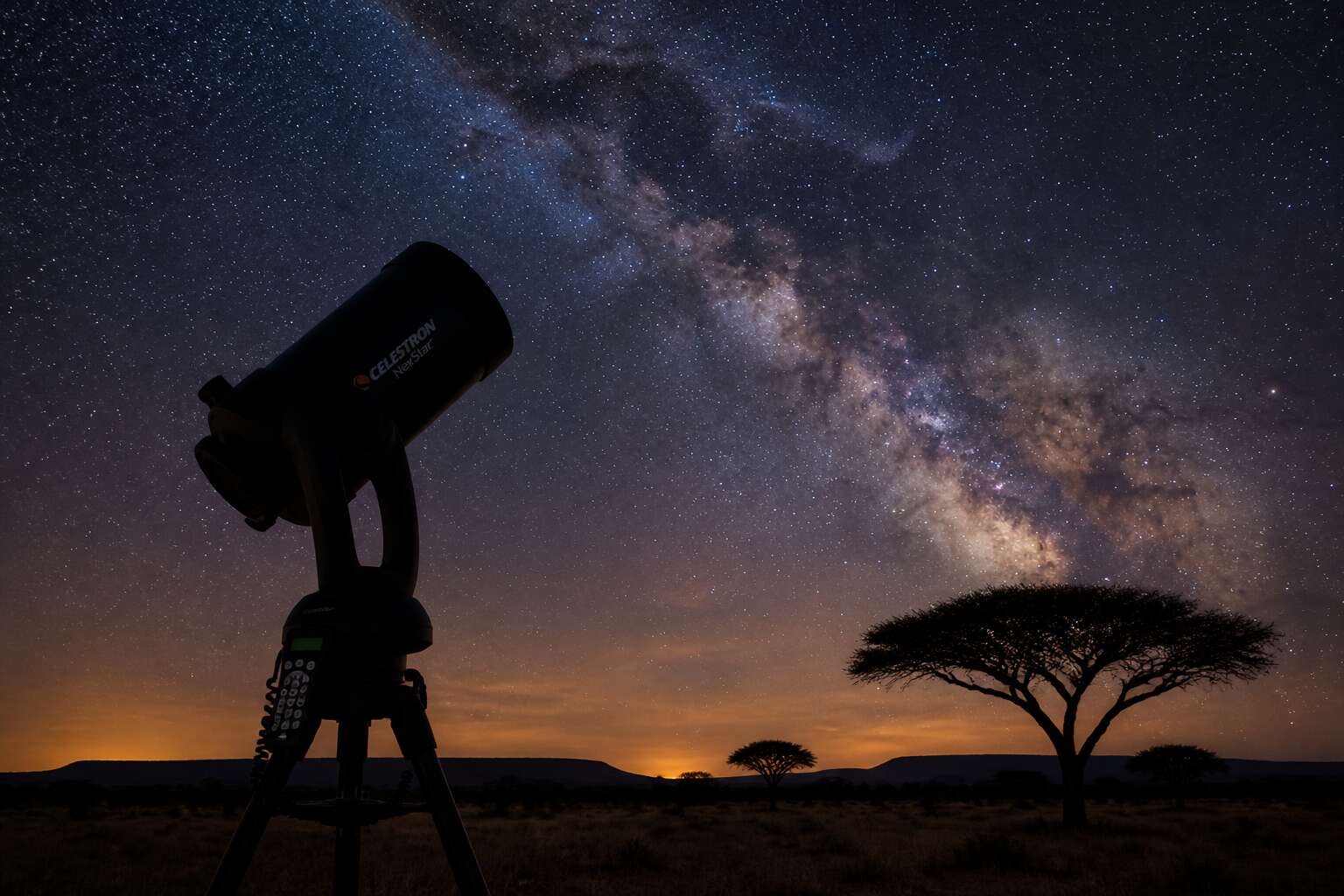
Understanding the Celestron NexStar Range
Popular NexStar Models and Their Target Audiences
Every evening across the Karoo, a thousand Celestron NexStar telescopes aim upward, and at least half of them are still hunting for the moon. That is not a flaw. It reflects the range’s core appeal: a computerized mount that handles the pointing, which explains its standing in South Africa. The NexStar lineup spans from 4.5 inch reflectors to 9.25 inch Schmidt-Cassegrains, each sharing the same GoTo technology across different price points.
Popular models group by intention:
- The 6SE fits casual observers who want Saturn’s rings without the math.
- The 8SE attracts deeper sky hunters chasing galaxies.
- The 130SLT suits newbies on a tight budget, which includes most of us after the rand moves.
For celestron nexstar south africa, buyers range from first time gazers to seasoned comet trackers, all united by a love for pressing one button and letting the mount do the work.
Key Technologies: GoTo Mounts, SkyAlign, and StarSense
I have watched first timers flinch when the NexStar mount swings toward the horizon with sudden purpose. The GoTo mount is the primary technology behind celestron nexstar south africa, moving on its own while you simply watch.
SkyAlign asks for three bright stars, though you don’t need to know their names. Point the tube anywhere, confirm a few targets, and the mount recalibrates itself. StarSense goes further, photographing the night sky and matching constellations without human input.
These systems share a few traits:
- GoTo mounts store thousands of celestial objects, from Saturn to the Magellanic Clouds.
- SkyAlign works best with a wide, clear horizon.
- StarSense suits gardens where the southern sky hides behind trees.
For celestron nexstar south africa buyers, this technology removes the guesswork entirely.
Aperture Sizes and What They Mean for Viewing
Aperture decides what the night reveals. Across the celestron nexstar south africa lineup, aperture runs from 4 inches to 8 inches. That number is the diameter of the primary mirror, and it controls how much light enters the scope.
More light means more detail. A 4 inch scope shows Saturn’s rings and Jupiter’s bands. An 8 inch scope resolves fainter moons and the Cassini division. South African skies reward that extra reach!
- A 4 inch aperture suits quick views and portability.
- A 6 inch aperture balances light grasp with weight.
- An 8 inch aperture excels at faint galaxies and planetary detail.
Aperture brings tradeoffs. Larger tubes weigh more, cool down slower, and need a sturdier tripod. The mount compensates in part, but the physical mass remains. Celestron nexstar south africa buyers who ignore this will watch a heavy tube stay parked indoors.
Portability and Setup Considerations for Local Astronomy
Owning a celestron nexstar south africa telescope means facing a real question. How much kit can you haul to a dark site after sunset? The range spans compact 4 inch tubes that slip onto a back seat, to 8 inch models that demand a larger vehicle. Weight matters when you travel from Johannesburg to the Karoo skies.
A power supply is the next consideration. The mount runs on 12V. A small LiFePO4 battery keeps the GoTo system alive all night. While buyers focus on aperture, the alignment routine stays the same. SkyAlign asks for three bright stars and a clear view.
Setup time shifts with model size. Heavier tubes need careful tripod placement. Uneven ground means a sandbag on the accessory tray steadies the base. The whole kit, from eyepieces to batteries, competes for boot space. A lost hand controller across a 120km drive makes that physical reality plain.
Why South African Stargazers Prefer NexStar
Adapting to Southern Hemisphere Skies
The south celestial pole sits in a sparse patch of sky, a challenge for anyone raised on Polaris. Here in South Africa, stargazers have access to the Magellanic Clouds and the Carina Nebula instead. That is where the celestron nexstar south africa experience proves its worth for us! Its onboard catalogue accounts for the rich southern hemisphere, so you are not scrolling through irrelevant northern listings. Consider what becomes possible:
- Panning over the Jewel Box cluster
- Chasing the Eta Carinae complex
- Tracking the Small Magellanic Cloud
These are ordinary targets for local observers. The mount’s internal navigation understands seasonal shifts below the equator. A Johannesburg backyard at 2am offers a different sky than one in Cape Town, and the NexStar handles that variation easily.
Light Pollution and Dark Sky Reserves in South Africa
South Africa claims more than a dozen International Dark Sky Association sites, yet most urban observers never see the Milky Way’s core through the glow of streetlights. That contrast shapes why so many local enthusiasts settle on a celestron nexstar south africa. In a Johannesburg suburb or a Durban complex, the telescope’s precise tracking still pulls out Saturn’s rings through the haze. The real reward arrives when you drive the scope to a reserve where artificial light disappears entirely.
The Karoo’s Sutherland region offers one of the darkest skies on Earth, and the !Ae!Hai Kalahari Heritage Park delivers a stark, ancient vista. Here, the NexStar’s database transforms from a list of objects into a map of visible wonders. Faint nebulae and distant galaxies that remain hidden in town suddenly appear in sharp detail. A celestron nexstar south africa becomes a bridge between urban constraint and rural freedom.
- Sutherland, Northern Cape
- Hogsback, Eastern Cape
- !Ae!Hai Kalahari Heritage Park
Each site presents a different slice of the southern sky, and the mount adapts without complaint. That adaptability, paired with a truly dark horizon, is why local stargazers keep coming back.
Climate and Weather Patterns for Optimal Viewing
The Highveld and Karoo regions offer more than 300 clear nights annually, yet atmospheric turbulence is the hidden variable. Thermal shock can ruin a session when a scope leaves a warm car boot. Local observers choose a celestron nexstar south africa because the optical tube reaches ambient temperature quickly, minimising distortion.
Karoo winter humidity drops below 20% in May and June. That dryness prevents dew from forming on the corrector plate, allowing long exposures without fogging. The NexStar tracks objects through the night while the sky remains photometric, a term for perfectly stable clarity.
Conditions that reward the patient observer:
- Altitude above 1,400 metres in Sutherland
- Calm winter fronts after a cold snap
- Desert air in the Kalahari with zero cloud cover
A celestron nexstar south africa suits these patterns because its drive system corrects for the seeing conditions, giving crisp views of globular clusters.
Local Astronomy Clubs and Community Support
Most South African stargazers do not buy a telescope and disappear into the dark. They join a club. The Pretoria Centre, the Cape Centre, and the Durban Centre all have active members who meet monthly and share observation plans. When someone brings a celestron nexstar south africa to a star party, the conversation changes. The handset becomes the lesson.
New owners learn the SkyAlign routine from members who have taught it for years. They learn which southern targets press the GoTo mount to its limit. The support is practical, not theoretical.
- Members share power bank solutions for long Karoo weekends
- They compare firmware updates for the NexStar hand controller
- They arrange group outings to Sutherland and the Kalahari
That community backing, and the shared experience of owning a celestron nexstar south africa, turns a fine instrument into an education.
Educational Value for Schools and Universities
South African classrooms face a practical challenge. How do you teach astronomy when the subject feels abstract? The celestron nexstar south africa answers that question directly. Point the telescope, enter a target, and the object appears in the eyepiece. That simple act transforms textbook diagrams into lived experience.
University physics departments value the same instrument for different reasons. Students learn tracking mechanics and coordinate systems without needing a full observatory. The results are immediate and measurable, which suits an academic setting.
- It engages learners of all ages with immediate results
- It provides a genuine research tool for practical exercises
- It handles the daily demands of institutional use
In my years covering astronomy education, I have rarely seen an instrument serve both school and university needs so effectively. The celestron nexstar south africa makes astronomy hands-on and repeatable, which is precisely what a curriculum requires.
Buying a NexStar Telescope in South Africa
Authorized Dealers and Reliable Online Stores
For Celestron NexStar South Africa buyers, the choice of seller matters more than the price tag. The local market has a mix of authorized optical specialists and resellers, and the difference affects your warranty, technical support, and access to genuine accessories. An authorized dealer can confirm that your unit is paired for southern latitudes, though many online stores also offer international shipping with local warranties.
When buying online, verify the store’s physical address and registration with the Consumer Protection Act. A few dependable platforms include dedicated astronomy retailers and established marketplaces. Consider these factors during your search:
- Whether the seller provides a local maintenance center
- If the stock includes the South African power adapter
- How returns are handled for missing parts
Asking those questions early prevents frustration. For a Celestron NexStar South Africa purchase, prioritize sellers who list their VAT numbers and offer clear waiting periods, since imported stock often takes weeks. A reliable store will also share the serial number before dispatch, allowing you to register the product with Celestron directly.
Pricing in ZAR and Currency Considerations
For a Celestron NexStar South Africa purchase, the exchange rate decides the final price. Importers set ZAR prices when they place orders, and that rate can shift between your first enquiry and your final payment. A telescope quoted at R18,000 in January might cost R19,500 by March, not because the retailer is greedy, but because the currency weakened.
When comparing international sellers for a Celestron NexStar South Africa order, check the quoted currency carefully. Many list prices in US dollars or euros, then convert at their own rate. You will also face:
- Import duties and VAT collected by SARS
- Shipping insurance with tracking
- Possible customs clearance fees
These extras often add 20% to 30% to the advertised price. Local stock avoids those surprises, but carries its own premium. Ask for the total landed cost in ZAR before you commit. That number, not the sticker price, is the real figure for your budget.
Warranty, Repairs, and Local Support Options
When you buy a Celestron NexStar South Africa, warranty terms matter more than most people expect. The GoTo electronics and motors are the heart of the scope, and if they fail, you need a repair path that actually works from here. Some local dealers handle returns directly. Others require you to ship to the distributor, which can take weeks.
Before purchase, ask who performs the repair work. Check warranty periods on the mount versus the optical tube. A few outlets offer extended cover for a fee. This list may help you evaluate options:
- Local dealer repair turnaround times
- Distributor backup stock for parts
- Return shipping costs in ZAR
Local support also means knowing a technician who understands the NexStar hand controller. Even without a fault, you may need firmware updates or alignment help. That service often proves more valuable than the device itself. Always confirm the support channel before you commit to a Celestron NexStar South Africa purchase!
Import Duties and Customs When Ordering Abroad
Customs officers do not care about your observing plans. When you order a scope from abroad, the Celestron NexStar South Africa price shown online often differs from what you pay at the border. Import duties and customs charges stack onto the base cost, and the final figure shocks many first time importers.
The South African Revenue Service applies VAT at 15% on the total value, including shipping. Some optical instruments attract an additional duty rate. Sellers who label packages as gifts create legal and logistical problems. Tracking your parcel through SARS clearance consumes hours of your day.
- The declared value determines your tax, not the retail price.
- Shipping insurance adds to the assessable amount.
- Exchange rate fluctuations alter the final rand figure.
Local distributors have already handled these costs, which explains part of the price difference. A Celestron NexStar South Africa purchase from a registered dealer includes a tax invoice and warranty registration. Imported units save on retail markup but burden the buyer with clearance fees, logistics, and potential repair delays.
Second-Hand Market and What to Check Before Buying
The second hand market offers a route to a Celestron NexStar South Africa ownership without the customs labyrinth. Local sellers on astronomy forums and community groups often list scopes that have survived a few Highveld thunderstorm seasons and the Karoo dust. A well stored instrument will outlast its first owner.
Before you hand over cash, test the GoTo mount’s slewing. Listen for grinding gears and watch for hesitation in the motors. Check the corrector plate for scratches, haze, or separation in the optics. Ask for a night demo if possible. The electronics fail more often than the glass.
– Verify the hand controller’s firmware version
– Inspect the tripod legs for cracks and bent lock levers
– Run a two star alignment to confirm the motors hold position
A Celestron NexStar South Africa unit from a private seller carries no warranty. Price that risk into the negotiation.
Setting Up and Observing with NexStar Locally
Step-by-Step Alignment for Southern Hemisphere Users
Setting up a telescope under the Karoo’s clear night sky is straightforward if you follow the hand controller’s logic. For southern hemisphere users, the first step is to level the tripod and let the optics cool down. This takes about thirty minutes.
- Press the Menu key and select Alignment.
- Choose Two-Star Alignment from the options.
- Pick Achernar and Alpha Centauri from the database.
- Center each star using the arrow keys, then press Enter.
Once aligned, the mount will track the southern cross across the sky. From Johannesburg or Cape Town, a celestron nexstar south africa gives you reliable pointing for deep-sky objects. I have used this setup for years, and it never fails to impress.
Best Deep-Sky Objects to View from South Africa
Under a Karoo sky, the Milky Way spills like silver dust across the void. From South Africa, a celestron nexstar south africa becomes the key to these southern treasures. Omega Centauri, a globular cluster of ten million suns, rises easily in the eyepiece. The Tarantula Nebula glows inside the Large Magellanic Cloud, a sight impossible from northern latitudes. I often guide visitors through these objects on clear winter evenings. The GoTo system makes the hunt effortless, letting you linger on each wonder.
Recommended targets include:
– Omega Centauri (NGC 5139)
– The Jewel Box cluster (NGC 4755)
– The Lagoon Nebula (M8)
– The Sculptor Galaxy (NGC 253)
Each object demands different magnification. The NexStar database contains them all. You simply select, slew, and observe. This is how local astronomers spend their nights.
Navigating the Constellations with GoTo Features
From a Johannesburg suburb or a Sutherland farmstead, the setup ritual rarely varies. A celestron nexstar south africa mounts on a sturdy tripod, the hand controller wakes, and the GoTo database waits. I have stood in the Karoo where Orion hangs upside down, and the mount still finds its targets without argument.
Navigating the constellations locally means hopping between deep-sky signposts. The handset holds the entire southern catalogue. You press a name, the motors respond, and the eyepiece fills with stars.
- Lock onto Achernar to orient yourself
- Cruise from the Jewel Box to the Tarantula Nebula
- Let the mount track for long exposures
Maintenance Tips for Humid and Dusty Environments
Setting up a celestron nexstar south africa begins with level ground. In the Lowveld, morning humidity coats every surface with moisture. I wipe the optical tube before sunrise and let it air dry.
Dust accumulates in the gears and on the lens. After each session, I keep the corrector plate covered until the scope cools, then seal it. A clear routine prevents buildup.
- Use a soft blower on the lens
- Seal the mount base with silicone grease
- Keep the hand controller in a dry bag
In Durban’s salt air, lubricate the mount every three months. From a Johannesburg garden, the same care extends motor life. The hand controller stores easily when you pack it away.
Using the NexStar App and Firmware Updates
Setting up a celestron nexstar south africa telescope from my stoep in Mpumalanga starts before sunset. I connect the NexStar app to the mount, which reads the phone’s GPS rather than requiring manual coordinates. The app lists bright stars visible from my location, so I skip the guesswork. Once the mount syncs, I let it perform its alignment sweep.
Firmware updates matter more than most owners realise. The hand controller ships with older software, and the app flags new versions. I update the mount using my laptop, then wait for the unit to cycle through its motors. That routine takes ten minutes and prevents tracking errors late at night. Owning a celestron nexstar south africa model means staying current with these patches.
Accessories and Advanced Tips for NexStar Owners
Recommended Eyepieces and Barlow Lenses
Selecting the right eyepiece transforms the Celestron NexStar South Africa experience more than any other upgrade. A 9mm Plössl delivers crisp views of the Tarantula Nebula, while a 32mm wide-angle frames the Large Magellanic Cloud in one field. The scope’s focal ratio determines how forgiving these choices feel.
Barlow lenses double or triple magnification without sacrificing comfort. A quality 2x Barlow excels on lunar craters and Saturn’s rings when seeing allows. Cheaper Barlows introduce chromatic aberration, so invest in a multi-coated unit.
Eyepiece kits for southern sky sessions benefit from these features:
- Eye relief above 15mm for eyeglass wearers
- Apparent field of view of 50 degrees or more
- Fully multi-coated lenses for humid nights
Pairing a 2x Barlow with a 25mm eyepiece gives two magnifications from one piece of glass. That versatility matters for trips to the Karoo.
Filters for Viewing Southern Skies and Moon Phases
Filters open a different layer of the southern sky when you use a celestron nexstar south africa telescope. A narrowband UHC filter pulls the Veil Nebula out from the dense Milky Way, while an OIII filter sharpens the Eta Carinae nebula’s structure. I keep a polarizing filter handy for nights when the full moon climbs over the Karoo.
Moon phases dictate what the NexStar reveals. The terminator, where light meets shadow, offers the finest crater detail. The few nights after new moon show the southern highlands in sharp relief! The waxing gibbous moon creates contrast that no filter fully removes.
For a celestron nexstar south africa owner, these accessories earn their place in the case:
- UHC and OIII filters for emission nebulae
- Polarizing filter for lunar glare
- Neutral density filter for bright phases
Deep-sky sessions suffer when the moon climbs high. A dark sky with a low moon beats a moonless sky with high humidity.
Introduction to Astrophotography with NexStar
Accessories often determine the gap between a functional telescope and a refined instrument. For a celestron nexstar south africa owner, a dew shield is essential on Karoo evenings; the temperature drops sharply after sunset and condensation forms quickly. A dielectric star diagonal preserves the subtle colour of southern planetary nebulae. I also keep a laser collimator in the case, since the corrector plate can shift during travel over dirt roads.
Astrophotography with the NexStar requires honesty about the mount. The alt-azimuth design tracks well for visual use, but long exposures make field rotation visible. Lunar and planetary imaging is where these telescopes excel. A compact USB camera capturing short video bursts, then stacking the sharpest frames in free software, produces striking results.
Experienced users attempt longer integrations with an equatorial wedge. The addition of a guidescope further refines tracking.
- Dew shield for humid nights
- Dielectric diagonal for contrast
- Planetary camera for video capture
These items transform a celestron nexstar south africa into a versatile imaging platform.
Power Solutions for Remote Viewing Locations
Remote viewing sites in the Northern Cape often have no electricity within sight. The darkness is absolute, and so is the absence of infrastructure. A celestron nexstar south africa setup draws roughly 1.5 amps while slewing, and the GoTo mount will not tolerate a weak supply. Many observers discover this when the hand controller resets mid-alignment.
Lead-acid deep-cycle batteries remain the standard for weekend excursions. A 35Ah unit powers a full night and leaves reserve for the following morning. Lithium power stations weigh less and cope better with cold Karoo temperatures.
- A voltage regulator prevents servo stalls
- Cigarette-lighter plugs are common, but check polarity
- Charging everything before departure avoids midnight disappointment
Seeing the mount lose power at 2am in the southern darkness is a lesson few repeat.
Troubleshooting Common GoTo Alignment Errors
After the power question is settled, the next frustration for a celestron nexstar south africa owner is the alignment routine. The hand controller announces alignment failed, and I have watched telescopes sit motionless under a southern sky.
Most alignment errors trace back to incorrect time, incorrect location, or a mount that believes it is somewhere else. Entering coordinates manually is safer than relying on the database. One wrong digit shifts the model by hundreds of kilometres.
- Check the time zone. South Africa uses UTC+2 all year.
- Confirm the date format. The hand controller uses month, day, year.
- Centre the alignment stars in the eyepiece rather than the finder.
For accessories, an illuminated reticle eyepiece makes final centring precise. A dew shield is not optional in the Karoo, where condensation forms on the corrector plate within an hour.
0 Comments