
Understanding Your Telescope’s Power Needs
Voltage and Current Ratings of Common Telescope Mounts
Many stargazers overlook a critical detail: a mount’s current draw changes with speed and load. A cold winter night in Sutherland can pull 2.5 amps from a supply rated for it, but a sudden slew across the Milky Way might spike that to 5 amps for a second. That is why understanding voltage and current ratings matters more than raw capacity.
Consider the most common setups found at local observing fields:
– Sky-Watcher NEQ6: 12V at 3A continuous, 5A peak
– Celestron AVX: 12V input, but tolerates 11V to 15V
– iOptron CEM40: 12V at 4A for fast slews
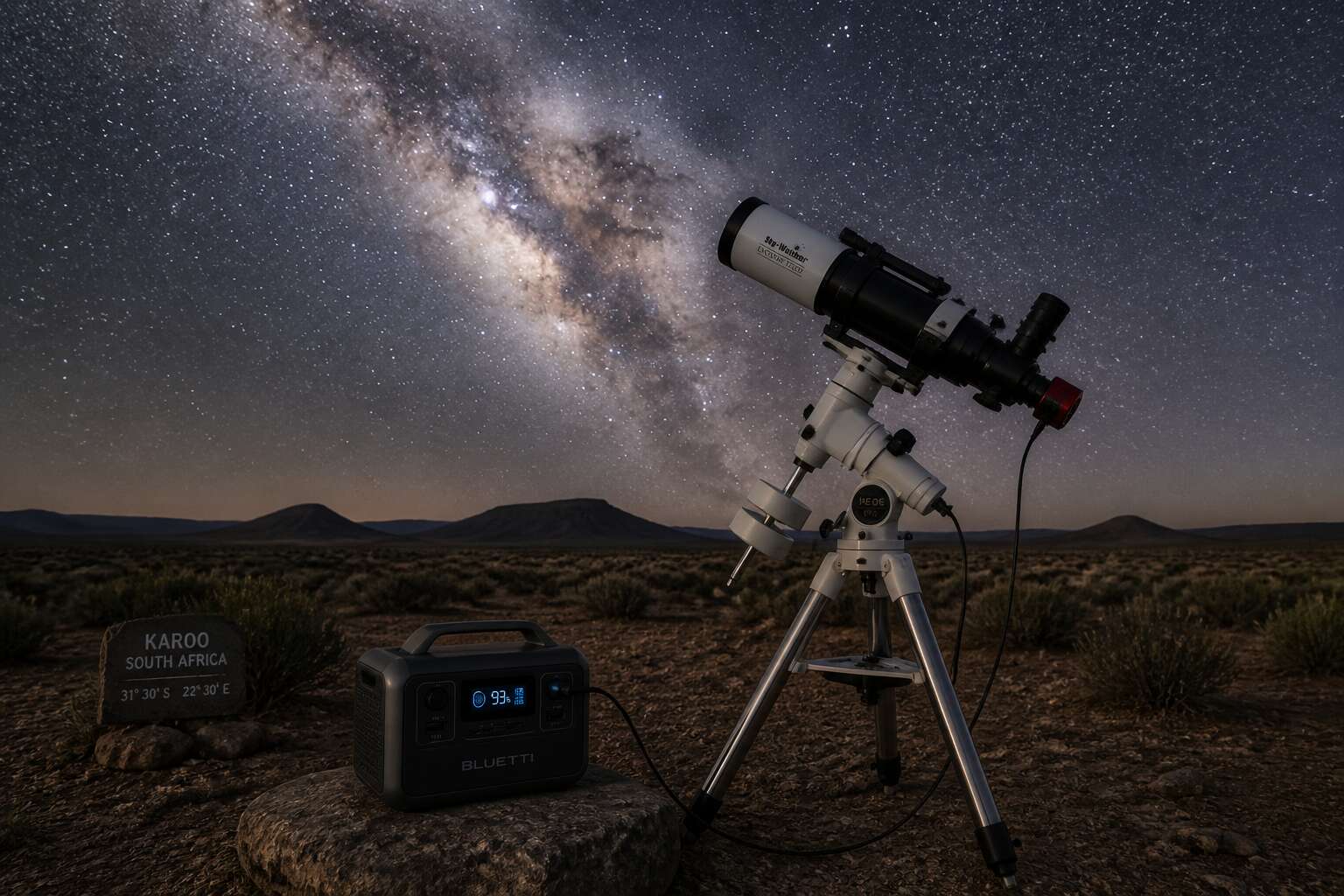
These numbers show why a reliable telescope power bank south africa must deliver stable voltage under surge. If the voltage dips below 11V, many mounts simply stop or enter error mode. No one wants to lose a clear evening to a dying field battery. Matching the supply to the mount’s real hunger, not just its sticker rating, makes all the difference under the Karoo sky.
Calculating Battery Capacity for a Night of Stargazing
Imagine a winter night in the Karoo. Darkness stretches for 12 hours, but the telescope drains its supply only while you observe. The real equation starts with averaging your mount’s current over a night: tracking, guiding, slewing. Suppose that average is 1.8A. Multiply by 6 hours of imaging and you hit 10.8Ah. A telescope power bank south africa with 20Ah nominal capacity covers this, but only if you understand the discharge curve. Batteries lose effective capacity as current climbs, and cold temperatures in Sutherland make it worse.
I once watched a seasoned astrophotographer pack up at 1am because his supply sagged under load. His mistake was ignoring the extra devices. Add a dew heater at 0.5A and a guide camera at 0.3A. That jumps the nightly load to 15.6Ah, leaving a thin reserve. Measuring each device with a watt meter before committing to a supply prevents that 1am defeat.
The Impact of Dew Heaters and Accessories on Power Draw
Your mount’s power draw is only the beginning. Dew heaters, guide cameras, electronic focusers, and the obligatory USB hub all draw from the same battery bank. In a South African winter, dew forms quickly. A half amp dew strip seems trivial until you run it for eight hours, consuming 4Ah. Add a guide camera at ical ical ical ical ical ical ical ical ical ical ical ical ical ical ical ical ical ical ical ical ical ical icalicalicalicalicalicalicalicalicalicalicalicalicalicalicalicalicalicalicalicalicalicalicalicalicalicalicalicalicalicalicalicalicalicalicalicalicalicalicalicalicalicalicalicalicalicalicalicalicalicalicalicalicalicalicalicalicalicalicalicalicalicalicalicalicalicalicalicalicalicalicalicalicalicalicalicalicalicalicalicalicalicalicalicalicalicalicalicalicalicalicalicalicalicalicalicalicalicalicalicalicalicalicalicalicalicalicalicalicalicalicalicalicalicalicalicalicalicalicalicalicalicalicalicalicalicalicalicalicalicalicalicalicalicalicalicalicalicalicalicalicalicalicalicalicalicalicalicalicalicalicalicalicalicalicalicalicalicalicalicalicalicalicalicalicalicalicalicalicalicalicalicalicalicalicalicalicalicalicalicalicalicalicalicalicalicalicalicalicalicalicalicalicalicalicalicalicalicalicalicalicalicalicalicalicalicalicalicalicalicalicalicalicalicalicalicalicalicalicalicalicalicalicalicalicalicalicalicalicalicalicalicalicalicalicalicalicalicalicalicalicalicalicalicalicalicalicalicalicalicalicalicalicalicalicalicalicalicalicalicalicalicalicalicalicalicalicalicalicalicalicalicalicalicalicalicalicalicalicalicalicalicalicalicalicalicalicalicalicalicalicalicalicalicalicalicalicalicalicalicalicalicalicalicalicalicalicalicalicalicalicalicalicalicalicalicalicalicalicalicalicalicalicalicalicalicalicalicalicalicalicalicalicalicalicalicalicalicalicalicalicalicalicalicalicalicalicalicalicalicalicalicalicalicalicalicalicalicalicalicalicalicalicalicalicalicalicalicalicalicalicalicalicalicalicalicalicalicalicalicalicalicalicalicalicalicalicalicalicalicalicalicalicalicalicalicalicalicalicalicalicalicalicalicalicalicalicalicalicalicalicalicalicalicalicalicalicalicalicalicalicalicalicalicalicalicalicalicalicalicalicalicalicalicalicalicalicalicalicalicalicalicalicalicalicalicalicalicalicalicalicalicalicalicalicalicalicalicalicalicalicalicalicalicalicalicalicalicalicalicalicalicalicalicalicalicalicalicalicalicalicalicalicalicalicalicalicalicalicalicalicalicalicalicalicalicalicalicalicalicalicalicalicalicalicalicalicalicalicalicalicalicalicalicalicalicalicalicalicalicalicalicalicalicalicalicalicalicalicalicalicalicalicalicalicalicalicalicalicalicalicalicalicalicalicalicalicalicalicalicalicalicalicalicalicalicalicalicalicalicalicalicalicalicalicalicalicalicalicalicalicalicalicalicalicalicalicalicalicalicalicalicalicalicalicalicalicalicalicalicalicalicalicalicalicalicalicalicalicalicalicalicalicalicalicalicalicalicalicalicalicalicalicalicalicalicalicalicalicalicalicalicalicalicalicalicalicalicalicalicalicalicalicalicalicalicalicalicalicalicalicalicalicalicalicalicalicalicalicalicalicalicalicalicalicalicalicalicalicalicalicalicalicalicalicalicalicalicalicalicalicalicalicalicalicalicalicalicalicalicalicalicalicalicalicalicalicalicalicalicalicalicalicalicalicalicalicalicalicalicalicalicalicalicalicalicalicalicalicalicalicalicalicalicalicalicalicalicalicalicalicalicalicalicalicalicalicalicalicalicalicalicalicalicalicalicalicalicalicalicalicalicalicalicalicalicalicalicalicalicalicalicalicalicalicalicalicalicalicalicalicalicalicalicalicalicalicalicalicalicalicalicalicalicalicalicalicalicalicalicalicalicalicalicalicalicalicalicalicalicalicalicalicalicalicalicalicalicalicalicalicalicalicalicalicalicalicalicalicalicalicalicalicalicalicalicalicalicalicalicalicalicalicalicalicalicalicalicalicalicalicalicalicalicalicalicalicalicalicalicalicalicalicalicalicalicalicalicalicalicalicalicalicalicalicalicalicalicalicalicalicalicalicalicalicalicalicalicalicalicalicalicalicalicalicalicalicalicalicalicalicalicalicalicalicalicalicalicalicalicalicalicalicalicalicalicalicalicalicalicalicalicalicalicalicalicalicalicalicalicalicalicalicalicalicalicalicalicalicalicalicalicalicalicalicalicalicalicalicalicalicalicalicalicalicalicalicalicalicalicalicalicalicalicalicalicalicalicalicalicalicalicalicalicalicalicalicalicalicalicalicalicalicalicalicalicalicalicalicalicalicalicalicalicalicalicalicalicalicalicalicalicalicalicalicalicalicalicalicalicalicalicalicalicalicalicalicalicalicalicalicalicalicalicalicalicalicalicalicalicalicalicalicalicalicalicalicalicalicalicalicalicalicalicalicalicalicalicalicalicalicalicalicalicalicalicalicalicalicalicalicalicalicalicalicalicalicalicalicalicalicalicalicalicalicalicalicalicalicalicalicalicalicalicalicalicalicalicalicalicalicalicalicalicalicalicalicalicalicalicalicalicalicalicalicalicalicalicalicalicalicalicalicalicalicalicalicalicalicalicalicalicalicalicalicalicalicalicalicalicalicalicalicalicalicalicalicalicalicalicalicalicalicalicalicalicalicalicalicalicalicalicalicalicalicalicalicalicalicalicalicalicalicalicalicalicalicalicalicalicalicalicalicalicalicalicalicalicalicalicalicalicalicalicalicalicalicalicalicalicalicalicalicalicalicalicalicalicalicalicalicalicalicalicalicalicalicalicalicalicalicalicalicalicalicalicalicalicalicalicalicalicalicalicalicalicalicalicalicalicalicalicalicalicalicalicalicalicalicalicalicalicalicalicalicalicalicalicalicalicalicalicalicalicalicalicalicalicalicalicalicalicalicalicalicalicalicalicalicalicalicalicalicalicalicalicalicalicalicalicalicalicalicalicalicalicalicalicalicalicalicalicalicalicalicalicalicalicalicalicalicalicalicalicalicalicalicalicalicalicalicalicalicalicalicalicalicalicalicalicalicalicalicalicalicalicalicalicalicalicalicalicalicalicalicalicalicalicalicalicalicalicalicalicalicalicalicalicalicalicalicalicalicalicalicalicalicalicalicalicalicalicalicalicalicalicalicalicalicalicalicalicalicalicalicalicalicalicalicalicalicalicalicalicalicalicalicalicalicalicalicalicalicalicalicalicalicalicalicalicalicalicalicalicalicalicalicalicalicalicalicalicalicalicalicalicalicalicalicalicalicalicalicalicalicalicalicalicalicalicalicalicalicalicalicalicalicalicalicalicalicalicalicalicalicalicalicalicalicalicalicalicalicalicalicalicalicalicalicalicalicalicalicalicalicalicalicalicalicalicalicalicalicalicalicalicalicalicalicalicalicalicalicalicalicalicalicalicalicalicalicalicalicalicalicalicalicalicalicalicalicalicalicalicalicalicalicalicalicalicalicalicalicalicalicalicalicalicalicalicalicalicalicalicalicalicalicalicalicalicalicalicalicalicalicalicalicalicalicalicalicalicalicalicalicalicalicalicalicalicalicalicalicalicalicalicalicalicalicalicalicalicalicalicalicalicalicalicalicalicalicalicalicalicalicalicalicalicalicalicalicalicalicalicalicalicalicalicalicalicalicalicalicalicalicalicalicalicalicalicalicalicalicalicalicalicalicalicalicalicalicalicalicalicalicalicalicalicalicalicalicalicalicalicalicalicalicalicalicalicalicalicalicalicalicalicalicalicalicalicalicalicalicalicalicalicalicalicalicalicalicalicalicalicalicalicalicalicalicalicalicalicalicalicalicalicalicalicalicalicalicalicalicalicalicalicalicalicalicalicalicalicalicalicalicalicalicalicalicalicalicalicalicalicalicalicalicalicalicalicalicalicalicalicalicalicalicalicalicalicalicalicalicalicalicalicalicalicalicalicalicalicalicalicalicalicalicalicalicalicalicalicalicalicalicalicalicalicalicalicalicalicalicalicalicalicalicalicalicalicalicalicalicalicalicalicalicalicalicalicalicalicalicalicalicalicalicalicalicalicalicalicalicalicalicalicalicalicalicalicalicalicalicalicalicalicalicalicalicalicalicalicalicalicalicalicalicalicalicalicalicalicalicalicalicalicalicalicalicalicalicalicalicalicalicalicalicalicalicalicalicalicalicalicalicalicalicalicalicalicalicalicalicalicalicalicalicalicalicalicalicalicalicalicalicalicalicalicalicalicalicalicalicalicalicalicalicalicalicalicalicalicalicalicalicalicalicalicalicalicalicalicalicalicalicalicalicalicalicalicalicalicalicalicalicalicalicalicalicalicalicalicalicalicalicalicalicalicalicalicalicalicalicalicalicalicalicalicalicalicalicalicalicalicalicalicalicalicalicalicalicalicalicalicalicalicalicalicalicalicalicalicalicalicalicalicalicalicalicalicalicalicalicalicalicalicalicalicalicalicalicalicalicalicalicalicalicalicalicalicalicalicalicalicalicalicalicalicalicalicalicalicalicalicalicalicalicalicalicalicalicalicalicalicalicalicalicalicalicalicalicalicalicalicalicalicalicalicalicalicalicalicalicalicalicalicalicalicalicalicalicalicalicalicalicalicalicalicalicalicalicalicalicalicalicalicalicalicalicalicalicalicalicalicalicalicalicalicalicalicalicalicalicalicalicalicalicalicalicalicalicalicalicalicalicalicalicalicalicalicalicalicalicalicalicalicalicalicalicalicalicalicalicalicalicalicalicalicalicalicalicalicalicalicalicalicalicalicalicalicalicalicalicalicalicalicalicalicalicalicalicalicalicalicalicalicalicalicalicalicalicalicalicalicalicalicalicalicalicalicalicalicalicalicalicalicalicalicalicalicalicalicalicalicalicalicalicalicalicalicalicalicalicalicalicalicalicalicalicalicalicalicalicalicalicalicalicalicalicalicalicalicalicalicalicalicalicalicalicalicalicalicalicalicalicalicalicalicalicalicalicalicalicalicalicalicalicalicalicalicalicalicalicalicalicalicalicalicalicalicalicalicalicalicalicalicalicalicalicalicalicalicalicalicalicalicalicalicalicalicalicalicalicalicalicalicalicalicalicalicalicalicalicalicalicalicalicalicalicalicalicalicalicalicalicalicalicalicalicalicalicalicalicalicalicalicalicalicalicalicalicalicalicalicalicalicalicalicalicalicalicalicalicalicalicalicalicalicalicalicalicalicalicalicalicalicalicalicalicalicalicalicalicalicalicalicalicalicalicalicalicalicalicalicalicalicalicalicalicalicalicalicalicalicalicalicalicalicalicalicalicalicalicalicalicalicalicalicalicalicalicalicalicalicalicalicalicalicalicalical
Why a Dedicated Power Bank Is Better Than a Car Battery
Your mount’s batteries might last the evening, but your sanity won’t survive the post-midnight scramble for a spare jumper cable. Car batteries are designed for a short, violent burst of energy to turn a starter motor. A telescope needs a steady, slow, polite trickle of power for hours. Draining a standard lead acid car battery below 50% damages it. You will not be able to start your car in the morning. This is a poor trade for a few hours of galaxy hunting.
A dedicated telescope power bank south africa unit solves this with a deep cycle chemistry that tolerates being drained to 20% or lower. They also provide clean, regulated voltage. A car battery’s voltage sags as it depletes, which can cause your mount to stall or, worse, your camera to reset mid-exposure. That minor inconvenience costs you twenty minutes of precious dark time. The weight is another factor. Lugging a 20 kilogram car battery up a Sutherl and hill is a workout you never requested.
The power bank market here is unique because of load shedding. You need a unit that can survive being charged from an inverter with a dirty sine wave. Most good units have protection circuits for that. They also have USB ports and 12V cigarette sockets built in, so you can skip the tangle of adapters. When comparing capacity, remember that a 100Ah car battery only gives you about 50Ah of usable power. A 100Ah lithium power bank gives you nearly all of it. That doubles your effective runtime without doubling the weight. It also means you can run that dew heater all night without stressing about the morning commute.
Key Features to Look for in a Power Bank for Astronomy
Output Ports and Compatibility with 12V and USB Devices
A single 12V port can be the difference between a night of observation and a dead mount. Modern rigs demand more. Guide scopes, cameras, and laptops draw USB power while the mount takes its 12V feed.
When selecting a telescope power bank south africa, inspect the output ports with suspicion. A quality unit offers a regulated 12V port and multiple USB-A or USB-C outputs. The 12V port must handle peak current draw without sagging. USB ports should supply at least 2A for dew heaters or astro cameras.
Compatibility extends beyond physical plugs. Some mounts require barrel connector sizes, with 5.5 x 2.1mm being standard. Verify polarity, as a reverse connection can damage electronics. A dependable telescope power bank south africa includes these port features:
- Separate voltage regulation per port to prevent interference
- USB-C Power Delivery for laptops or newer cameras
- Overcurrent protection on every socket
Battery Chemistry and Cold Resistance for Nighttime Use
Battery chemistry determines how your rig behaves when the Karoo night turns cold. LiFePO4 cells hold voltage steady down to freezing, while standard lithium-ion batteries lose capacity as temperatures drop. A telescope power bank south africa should use cells rated for low temperature discharge, not consumer grade lithium.
Cold resistance matters more than raw amp hours. I have seen mounts stall below 10°C when internal resistance climbs. Look for a unit with thermal management or a spec sheet stating an operating range down to -10°C. Some manufacturers include self-heating circuits that draw from the bank itself.
LiPo (lithium polymer) offers higher energy density but degrades faster in heat. LiFePO4 lasts 2000 cycles and sags less when a dew heater kicks in. For South African astronomers observing from May to August, when the highveld approaches freezing, this chemistry proves reliable. Choose a suitable telescope power bank south africa for winter observing.
Recharging Options Including Solar and Car Chargers
South Africa’s abundant sunshine creates an obvious temptation: let a solar panel refill your telescope power bank south africa during downtime at the eyepiece. The panel’s wattage matters less than the bank’s input circuitry. The specifications worth verifying are:
- An MPPT charge controller, which extracts far more usable current than PWM in partial shade.
- Pass-through charging, so the bank runs the mount while simultaneously absorbing solar energy.
- A stated input voltage range that tolerates your panel’s open circuit peaks.
Car charging demands the same scrutiny when selecting a telescope power bank south africa. A cigarette lighter input rated for 8 amps restores capacity during the drive to Sutherland or the Karoo. Low wattage adapters can actually drain the bank if the mount draws more than the adapter supplies. I have watched this drain happen on more than one cold night.
Portability and Weather Resistance for Outdoor Sessions
Carrying a telescope power bank south africa across a dark site reveals the true cost of every kilogram. I once hauled a 20 amp hour brick up a koppie near Sutherland, and my back ached for a week. Portability is about shape, handle design, and backpack fit.
Weather resistance determines survival for outdoor electronics. A bank without an IP54 rating accumulates dust from the Karoo wind and dew from a humid night. Look for sealed USB flaps and a battery management system that cuts output if moisture bridges terminals.
- Weight below 2 kilograms for comfortable field use
- Reinforced housing that survives a drop onto gravel
- Rigid output leads that resist cracking in cold
The best telescope power bank south africa survives being forgotten on a camp table at 3 am. That resilience matters more than glossy specs.
Safety Protections Like Short Circuit and Overload Prevention
A controller that dies at 2 am from a faulty cable is a painful loss. I watched a 12V output throw sparks after a short circuit, and the mount went silent instantly. Protection circuitry defines the quality of any telescope power bank south africa. Capacity labels mean nothing when a surge reaches your mount’s circuit board!
Battery management systems handle reverse polarity and low voltage shutoff. A bank that keeps delivering power after a fault will destroy expensive electronics. The protections that matter:
- Short circuit prevention that cuts output within milliseconds
- Overload detection before ports overheat and melt
- Thermal cutoff for cold nights when resistance shifts
- Low voltage shutoff to preserve battery health
Top Power Bank Options Available in South Africa
Local vs International Brands and Availability
Choosing a telescope power bank south africa often means weighing domestic reliability against international innovation. Local brands like HCDP and Mecer understand Eskom’s load-shedding patterns, offering robust 12V outputs that match marine-grade standards. International names such as Bluetti and Jackery arrive through retailers like Takealot, but shipping costs and warranty claims complicate purchases.
For immediate needs, consider these widely available options:
- Ritar deep-cycle lithium units, assembled in Cape Town.
- Victron Energy portable power stations, stocked at outdoor outfitters.
- EcoFlow River series, via online importers with local support.
International availability fluctuates with exchange rates, which directly affects procurement timelines.
Popular Models from South African Outdoor and Astronomy Shops
The Karoo night is silent, unforgiving, and utterly dark. Your mount needs power that matches that severity. At Sutherland’s astronomy outfitters and Cape Town’s Orion Optics, the EcoFlow River 2 and Bluetti EB3A dominate the shelves, both rated for 12V output and ready for a full eight hour session.
- EcoFlow River 2: 256Wh, 12V car port, 6kg.
- Bluetti EB3A: 268Wh, 12V output, solar input capable.
- Ritar 12V 18Ah deep-cycle: budget option at outdoor shops.
The Ritar, assembled in Cape Town, holds charge through winter dew sessions without complaint. Meanwhile, the Celestron PowerTank Lite still appears at specialist dealers, though its 7Ah capacity fades by 2am. For a serious telescope power bank south africa purchase, the Mecer 12V 20Ah lithium unit remains the local workhorse, handling a GOTO mount and a dew heater simultaneously. Shop stock shifts with the rand, so call ahead before driving out.
Budget-Friendly Choices for Beginner Stargazers
Nothing kills the romance of a first deep sky session faster than the clicks and whirs of a dying mount. A 2am silence from your telescope, the red light fading, is the antithesis of cosmic wonder. For the newcomer entering the hobby, the initial foray into portable energy doesn’t require a bank loan. It requires a pragmatic look at what actually moves a budget GOTO mount without the accompanying heartache.
While the premium lithium units from local outfitters offer longevity, the entry point is often dominated by the humble sealed lead acid battery. The Mecer 12V 7Ah is a common sight at outdoor retailers like Outdoor Warehouse, and it serves a purpose. It is heavy, clunky, and looks like a relic from an age of chunky car phones. But for a small refractor and a slow slewing mount, it can survive a few hours of sporadic viewing. The catch is the term ‘sporadic’. Continuous tracking with the hand controller illuminated will drain it faster than you can say “Cape Town winter”.
If you want a more reliable beginner experience without the astronomical price tag, you might consider this shortlist of local budget gear:
- Ritar 12V 9Ah: Sealed, affordable, and available at almost any battery shop in Johannesburg. Pair it with a 12V car charger.
- Busch 12V 10Ah: Another SLA option, often found at security supply stores, offering a slight capacity increase over the base Mecer.
- DIY Project Box: A standard 12V drill battery, a simple USB converter, and a pause. It is crude, but it is a lesson in power management.
The real trap for the beginner is the false economy of the heavy battery. You will save a few hundred rand at the till, but you will pay for it in back pain while hiking to a dark site in the Free State. The watt hour rating might look sufficient, but the chemical properties of SLA batteries mean they struggle to deliver consistent voltage as they deplete. A lithium unit, even a small one, gives you a steady 12V until the very end, which is what your mount’s stepper motors crave. For the first few months, a bigger ambition might be to avoid the cheap cigarette lighter plug that falls out at the slightest breeze. A quick modification with a proper Anderson plug is a rite of passage. A telescope power bank south africa purchase should always factor in the hidden cost of reliable cabling, not just the shiny box.
High-Capacity Power Stations for Serious Astrophotographers
The night does not forgive a dying cell. For astrophotographers guiding a mount through hour-long exposures, the compact lithium units of the beginner are not enough. High-capacity power stations have become the backbone of serious imaging sessions. A telescope power bank south africa must deliver more than a single voltage rail. It must power a cooled camera, a guide scope, and a laptop, while dew heaters labour against the Karoo fog.
Three units dominate the local market:
- EcoFlow Delta 2, with 1024Wh of storage and a pure sine wave output
- Bluetti AC200L, doubling that capacity for extended sessions
- Hubble H-1000, a lithium iron phosphate option with local warranty support
I have watched battery meters drop faster than expected on a cold Sutherland night. The margin between success and a corrupted image is measured in watt hours!
Practical Tips for Using a Power Bank with Your Telescope in South Africa
Managing Power During Load Shedding
Load shedding turns a promising night into a staring contest with a dead mount. A reliable telescope power bank south africa ends that contest before it begins. Check your unit before you leave, not after the batteries die.
Charge during off peak hours, ideally before noon. Evening charging often coincides with power cuts, leaving you without reserve. Keep the bank warm until you need it, because lithium cells lose capacity when cold. For GoTo mounts, use medium slew speed. High speed drains power rapidly.
To stretch your reserve further:
– Dim the hand controller backlight.
– Disable the mount’s beeper.
– Turn off the telescope fan after sensor cooling.
These tweaks add up. A charged telescope power bank south africa will comfortably outlast load shedding, giving you more time under the stars.
Adapting Cables and Connectors for South African Equipment
South African telescope owners often discover that the right connector matters as much as the right battery. Cables and plugs vary between brands, and a telescope power bank south africa sold locally usually ships with the correct 5.5mm x 2.1mm barrel plug. Imported units may not, so keep a multimeter handy.
Check the polarity before connecting anything. Most mounts use centre positive, but some older models expect the opposite. A polarity inverter cable prevents damage without soldering. When choosing a telescope power bank south africa, confirm which adapters are included in the box.
Carry spares for these common situations:
– 5.5mm x 2.1mm to 5.5mm x 2.5mm adapter
– Cigarette lighter plug with flying leads
– USB to 12V boost cable
Test every connection in daylight. Fumbling with adapters under a dark sky wastes valuable observing time.
Charging Strategies for Extended Trips to Dark Sky Reserves
The drive to a dark sky reserve is part of the session. A full charge on your telescope power bank south africa before you leave Cape Town or Johannesburg is the baseline. Most units take hours to recharge, so do not rely on a quick top-up at the reserve. Solar panels work, but their output in the Karoo winter is often weaker than expected. Plan for a slow, steady recharge during the daylight hours.
Consider your power consumption across the entire trip, not just one night. If you are staying for a weekend, you need a strategy for the second evening. A car charger is the most reliable backup. While you drive to the observing site, the alternator can restore a significant amount of capacity. Before sunset, run a quick checklist:
– Fully charge the telescope power bank south africa
– Connect the car charger for a 30 minute boost
– Verify the charge level indicator on the bank
This routine ensures your gear is ready for the long, cold hours under the stars.
Maintenance and Longevity Best Practices
A lithium cell loses roughly 20% of its capacity every year when stored fully charged in a warm environment. In Durban’s humidity or the Highveld’s summer heat, that decay accelerates. I have seen otherwise reliable telescope power bank south africa units fail after just eighteen months of careless storage!
Store your bank at around 50% charge, not full, and the internal battery management system handles the rest. Clean the barrel connectors with isopropyl alcohol every few sessions. Dust from the Karoo finds its way into every socket.
- Keep the firmware updated if your unit has an app
- Cycle the battery once every three months
- Inspect cables for cracks before each outing
Heat is the silent killer. A dashboard in the Kalahari sun can push internal temperatures past 60 degrees Celsius. Your telescope power bank south africa will keep delivering current, but the chemistry degrades permanently. Seasoned observers in Upington carry their batteries inside a cooler box during the drive north.
Where to Buy and How to Compare Prices in South Africa
Online Retailers and Marketplaces
Finding the right telescope power bank south africa starts with knowing which online retailers actually stock reliable units. Takealot and specialized astronomy shops like Sky-High or Optic-Tech offer the widest range, while marketplaces such as Bidorbuy can surface second-hand deals that come with risk. Comparing prices demands more than glancing at the sticker price. Shipping costs vary sharply across provinces, and a low upfront cost often hides steep delivery fees.
When you evaluate different sellers, keep these criteria in mind:
- Total price including VAT and delivery
- Seller reputation and response time for warranty claims
- Stock availability, because load shedding drives sudden demand surges
A quick check across three or four platforms typically reveals a 15% price difference for the same model. That gap shrinks once you factor in return policies, so always compute the final landed cost before committing.
Reading Reviews and Specs as a South African Consumer
Reading reviews for a telescope power bank south africa demands a wary eye. A five star rating from overseas buyers tells you little about behaviour during Eskom’s scheduled blackouts or the damp Cape winter. Look for local feedback on forums like Cloudy Nights SA, where owners discuss real discharge curves and cold performance. Spec sheets deserve equal scepticism. Many sellers list peak wattage rather than continuous output, a distinction that matters when your mount slews at 2 AM.
When comparing price for a telescope power bank south africa, strip away the marketing language and focus on measurable details:
- Continuous amp hour rating at 12V, not 3.7V internal cell capacity
- Number of charge cycles before capacity drops below 80%
- Warranty processing time within South Africa rather than return shipping to China
A unit that costs R400 more but holds its voltage under load will save you from a dead mount on a clear night. The cheapest option on the shelf is rarely the cheapest per hour of observing.
Warranty and After-Sales Support Considerations
Specialist astronomy retailers in Johannesburg and Cape Town stock telescope power bank south africa units with local certification. General electronics chains carry similar brands, but their staff cannot answer questions about discharge rates. Pay the premium if you need informed advice at the counter.
Build a price comparison spreadsheet. Track the unit price, delivery cost, and warranty length. The cheapest listing online may come from a seller with a two week dispatch delay.
- Ask for the continuous discharge rating in writing.
- Confirm whether the seller handles warranty claims directly.
- Check if the warranty covers the battery cells.
A telescope power bank south africa from an authorised dealer provides a repair path within the country. Grey imports save money upfront, but negotiating with a foreign seller when the voltage drops costs more in frustration. The extra R400 covers the paperwork you will never need to do.
0 Comments