
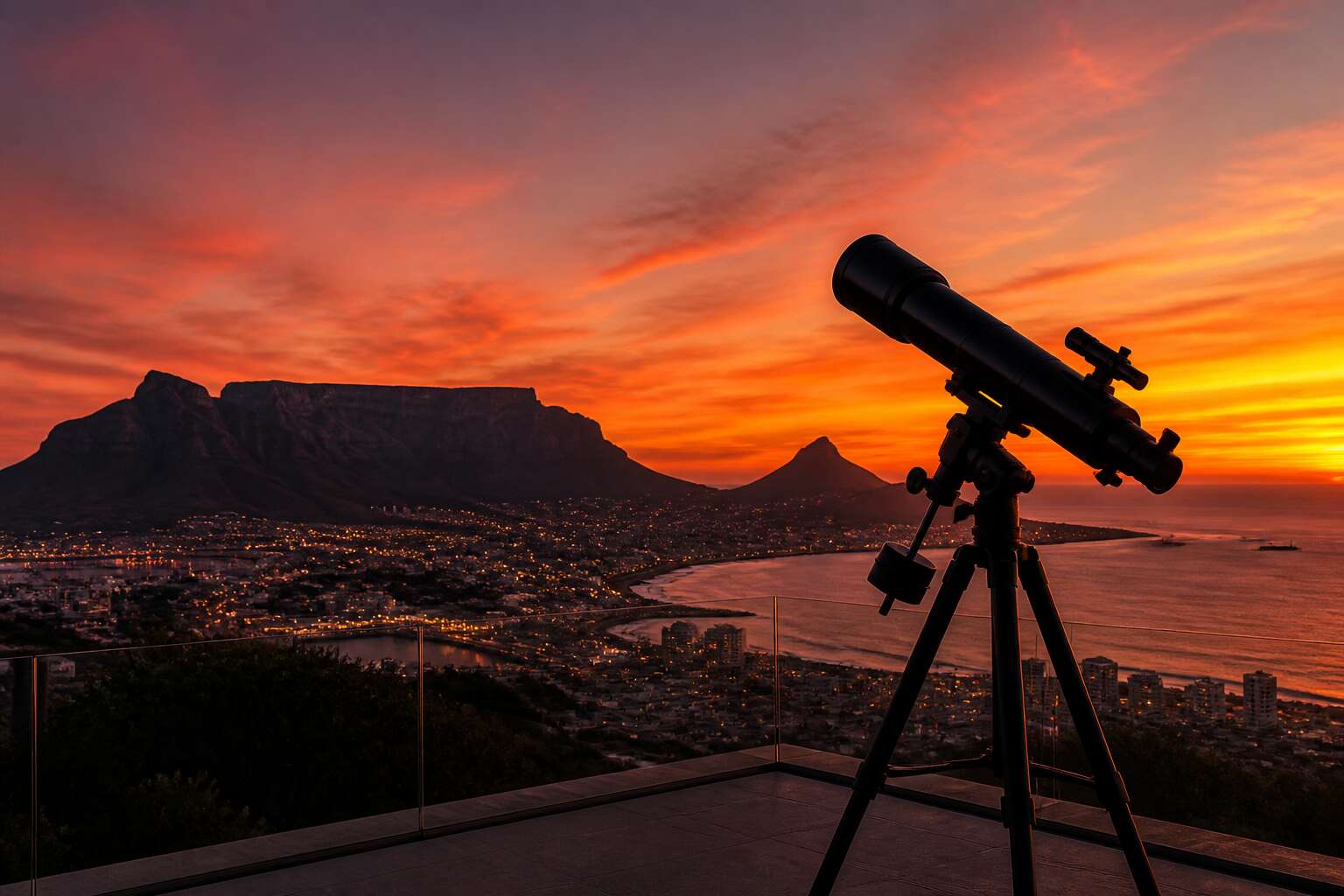
Assessing the Local Astronomy Market for Beginners
Determining the Right Aperture for Your Observing Goals
Assessing the local astronomy market for beginners starts with admitting that a telescope is bought for a possible future, not the present sky. The first time you view Saturn through a friend’s scope, the decision to visit telescope stores Cape Town feels simple. Then you confront the real variables: portability, cooling time, and how often clouds obey your schedule! Repeat visits to telescope stores Cape Town may reveal more options, but the core question remains the same.
Determining the right aperture for your observing goals means separating desire from endurance. A 70mm refractor is light, but it collects a fraction of the light a 150mm reflector gathers. Under Cape Town’s coastal haze, that difference is brutal. Every extra centimeter of aperture becomes a confession of your willingness to wait and hunt. Beginners must choose a size they will actually haul outside, or the instrument stays indoors.
Optical Tube Design: Refractor, Reflector, or Compound?
Rumour has it that every telescope owner performs exactly three collimations in their life, and each one converts them to the next design. The refractor, with its sealed tube and fuss-free demeanour, appeals to the tidy soul. The reflector, a light bucket with an open frame, tempts the bargain hunter who enjoys tinkering. The compound tube folds a long focal length into a boxy frame that fits a small car boot. When you visit telescope stores Cape Town, the conversation turns quickly to maintenance. The staff have seen every confession. They know which design returns to the shop for accessories and which one greets spiders in the hallway. Your own habits will make the decision for you.
- Refractor: elegant, durable, costs more per inch.
- Reflector: generous aperture, needs periodic alignment.
- Compound: portable, weather-sensitive optics.
A Tuesday night in the garden settles every argument about design.
Tripping Over Tripods: Stability and Portability Trade-offs
Walking into any of the telescope stores Cape Town offers, the first thing a newcomer notices is the dance of the tripods. They stand like long-legged birds, each one promising a different version of the night. The market here is built on this tension. A stable mount is the quiet foundation of every observation, yet it is the most frequent casualty of a beginner’s budget. Everyone wants to reach for the stars, but no one wants to carry a steel girder to the park.
The trade-off is intimate and personal. A lightweight aluminium tripod slides easily into a backpack for a trip to the Cederberg, but it trembles with every breeze and every heartbeat at the eyepiece. A heavier steel or wooden pier steadies the view, yet it demands a permanent corner in your lounge or a dedicated space in your boot. The used market in Cape Town is often flooded with these choices, and it pays to handle them before you buy. When you are perched on a chilly hillside, trying to keep Jupiter in view while your mount shivers, you understand the value of a firm stance.
– Spread the legs wide and check the locking mechanisms for plastic parts.
– Weigh the head against the legs; a heavy head on a spindly frame is a recipe for vibrance.
– Consider the height of the eyepiece when the tripod is fully extended.
The local shops are well aware that most stargazing happens in the suburbs, where the wind off the Atlantic can be brutal. This is why the sales conversation often circles back to what you are willing to sacrifice. The margin between a stable night and a blurring one is measured in a few hundred rand and several kilograms of metal. In the hunt for a beginner’s setup, the tripod is the true test of your commitment to the hobby. It is the first piece of gear you will not outgrow, and the last one you will replace. The romance of astronomy fades quickly when your equipment cannot stand still, and the staff at telescope stores Cape Town have heard it all before. They know that selling a telescope is easy. Selling the patience to set up its legs is a different craft altogether.
Accessories You Should Not Overlook
The accessory pyramid is where the local market truly reveals its character. Eyepieces, filters, and collimation tools often outnumber the telescopes in the display cases at telescope stores cape town. A beginner might assume a single eyepiece suffices, yet the magnification story changes entirely with a decent 2x Barlow lens. The Atlantic seaboard’s marine layer also makes a dew shield a practical necessity, not an optional extra.
Regarding the essential gear, the local shops have a clear hierarchy of what they recommend for the Cape Peninsula’s conditions.
– A red LED torch for preserving your night vision on windy evenings
– A planetarium app to navigate the southern celestial pole’s unique landmarks
– A padded eyepiece case, since the potholed roads to observing sites are unforgiving
The staff understand that a telescope is a durable investment, while accessories are the consumables of the hobby. Their guidance is grounded in the reality of Table Mountain’s microclimate. The market here rewards those who prepare for the cold, the damp, and the long walk back to the car. The right additions make every clear night a productive one without needing a second mortgage.
Avoiding Common First-Time Buyers’ Mistakes
Walking into telescope stores cape town as a beginner can feel overwhelming. The shelves display polished tubes and intricate mounts, yet the most valuable asset is the conversation you have with the staff. First time buyers often fixate on magnification numbers, overlooking the practicalities of storage and setup.
One common mistake is purchasing a telescope that takes an hour to assemble. Another is ignoring the secondhand market, where serious amateur astronomers in the Western Cape trade up regularly. A careful inspection of used gear can yield a superb instrument at half the price.
- Choosing a telescope based on the box artwork rather than the view through it
- Overlooking the test stations that many shops have set up
- Skipping the secondhand board near the counter
The market rewards those who ask questions. Staff at telescope stores cape town see thousands of beginners every year, and they know which mistakes recur. Take your time, and let the telescope find you.
The Value of In-Person Advice and Hands-On Experience
Why Visiting a Physical Showroom Matters
There is a moment when a telescope ceases to be a specification sheet and becomes an object you lift, rotate, and focus. That moment only happens inside a showroom. At telescope stores cape town, you can place your hand on the focuser, test the weight of the tube, and feel the difference between a wobbly tripod leg and one that locks solid.
The staff at telescope stores cape town have spent nights under the same southern skies you will observe. I have watched a staff member match a beginner to a Dobsonian by noticing how the customer’s shoulders tensed while lifting. That sort of judgement only forms through years of face-to-face service!
In a showroom you can also:
- check how quickly a mount responds to manual adjustment
- verify that your car boot will close with the case inside
- compare the exit pupil comfort across different eyepieces
That physical reality saves you from a costly guess.
Asking the Right Questions About Sky Conditions
When you visit telescope stores cape town, the conversation matters as much as the hardware. A consultant will ask where you observe from, whether light pollution washes out the southern Milky Way, and how often winter clouds interrupt your sessions.
You should arrive with your own questions about sky conditions. Ask about seeing stability near Table Mountain, about dew point patterns along the coast, and about which targets are realistic from urban gardens versus dark sites in the Karoo. These answers reshape recommendations for filters, aperture, and magnification.
A good showroom conversation covers:
- how atmospheric turbulence affects high-power views in your area
- which eyepiece focal lengths suit the seeing conditions you will actually get
- whether a finder scope or a Telrad suits your light pollution levels
That insight is impossible to get from a spec sheet.
Testing Eyepieces and Binoculars Before Purchase
There is a distinct unease in trusting a spec sheet for an eyepiece. The eye, not the number, decides whether the view pleases. At telescope stores cape town, I have watched customers hold binoculars to the window, checking the color fringing against a harsh sky. That act of personal testing has no substitute!
A consultant who has observed under the Cape’s turbulent atmosphere offers advice no webpage can replicate. They will study your stance, your blink rate, your grip. They may place two eyepieces in your hand and request a comparison of edge sharpness on a distant pole. This is not a sales transaction. This is a calibration of perception.
Local Restocking and Special Order Times
In person advice at telescope stores cape town starts with observation, not magnification numbers. I have watched customers hold the instrument, feel the focuser, and weigh the mount in their hands. A consultant reads your patience level and notices whether you flinch at a slow focuser. That knowledge shapes a recommendation. It cannot be encoded in a spec sheet.
Local restocking times matter more than most buyers expect. South African suppliers operate on their own schedules. A popular mount might arrive in two weeks; a niche brand could take three months. At telescope stores cape town, staff track these timelines daily. They know what is on the water, what is stuck at customs, and what is already on the shelf. Special orders carry risk, so the store’s experience with import paperwork becomes valuable. When a shipment lands, the consultant calls you first.
After-Sales Support, Maintenance, and Repairs
Warranty Coverage and Return Policies Explained
The worth of telescope stores cape town becomes clear after the purchase. When equipment fails or needs alignment, the quality of after-sales support decides whether you stay frustrated or keep observing. Seek out telescope stores cape town that employ technicians who can diagnose issues on-site. I always ask about turnaround times for repairs and whether they stock common replacement parts.
Maintenance is simple but essential. Cleaning optics requires proper tools and gentle technique. I find that a store offering guided maintenance workshops or detailed procedures shows commitment! For warranty coverage, always request written terms before buying. Some stores handle claims directly, others require manufacturer contact. Your return policy needs clarity too.
- Restocking fees and their percentages
- Time limits for returns on opened items
- Whether eyepieces and filters are returnable
Finally, ask about loaner equipment during lengthy repairs. A responsive support network adds lasting value to any telescope purchase.
Lens Cleaning and Dew-Shield Essentials
The moment a telescope leaves the showroom, the real relationship begins. That pristine instrument now faces the coastal humidity of the Cape, the dusty winds of the Karoo, and the inevitable fingerprints of curious friends. A store that vanishes after the sale leaves you navigating these challenges alone. The best telescope stores cape town offer a genuine safety net, with technicians who understand collimation and optical alignment.
Lens cleaning is where many enthusiasts hesitate, and rightly so. Compressed air, a quality brush, and a microfibre cloth are your starting points. Work from the centre outward with light pressure. A proper maintenance routine should also address dew formation, which creeps up on observers during long winter nights. A dew shield, whether a commercial model or a simple rolled mat, prevents moisture from settling on the glass. Here is a quick check for your maintenance kit:
– A blower bulb for dust removal
– Optical cleaning solution for stubborn spots
– Lens tissue or a dedicated cloth
– A dew shield or heater strip
Regular attention to these details keeps the views sharp. When repairs do become necessary, the responsiveness of your local dealer matters. A store that can handle basic servicing on-site saves you weeks of shipping delays. The practical value of telescope stores cape town becomes apparent when you need a quick fix before a weekend observing trip. They understand the local conditions and can offer advice on protecting your gear from the elements specific to the region.
Collimation and Tune-Up Services
Every reflector telescope will eventually need collimation. Mirrors shift during transport, temperature swings, or a bump against the doorframe. That fuzzy star in your eyepiece is not bad seeing. It is a signal. It means your mirrors have drifted out of alignment.
Collimation sounds technical because it is. A laser collimator helps, but steady hands matter more. This is where after-sales support from telescope stores cape town proves essential. A technician who can adjust your optics on-site saves you a week of shipping delays.
- A star that will not focus sharply on either side of the eyepiece
- A halo around bright stars
- Sharp centres with blurry edges
Tune-up services also cover the focuser, mount screws, and finder alignment. Local dealers know which greases stiffen in Cape winters and which screws loosen on Karoo gravel. A quick check before a weekend trip keeps your views sharp!
Coastal Corrosion Prevention for Mounts and Tripods
The Atlantic breeze carries more than cool air. Salt particles settle on steel tripod legs and aluminium mount housings. Within months, that fine grey mist can etch pitting into surfaces. That is the reality for coastal observers! After-sales support from telescope stores cape town includes corrosion audits for exactly this scenario. A technician will show you which marine-grade greases protect clutch mechanisms and which anodised finishes resist the salt.
Routine maintenance extends the life of a mount. Loose bolts appear after long drives on gravel roads. Electrical connections oxidise in humidity. Repairs need replacement parts that tolerate the local climate. Dealers keep those components in stock.
Watch for these warning signs:
- White powder forming on metal joints
- Difficulty moving the mount smoothly
- Rust spots along the legs
These symptoms warrant a professional check. Telescope stores cape town strip, clean, and re-grease affected areas before corrosion reaches internal bearings.
Building Confidence Through Community Astronomy Events
Locating Dark-Sky Sites Away From City Lights
Thousands of amateur astronomers across South Africa first learn their way around the sky at community events. A single night of shared observing, where hands point and rough whispers explain, builds confidence faster than weeks alone with a manual. The shared attention offsets the cold, dark air.
However, Cape Town’s urban luminance erases all but the brightest stars. Locating dark-sky sites away from city lights means driving east toward the Overberg or north into the dry Karoo. There, the Milky Way reveals its full texture, and the Small Magellanic Cloud appears as a pale smudge on the southern horizon.
For practical guidance on matching gear to these remote conditions, telescope stores cape town can point you toward the right balance of portability and light grasp.
Participating in Beginner-Friendly Star Tours
A single star party can replace a month of solitary fumbling. At a beginner friendly star tour, the telescope is not the star. The patience of a seasoned guide is. They show you how to find the Southern Cross, then let you try. A stranger beside you cheers when you finally centre it in the eyepiece. That moment builds more confidence than any manual.
These tours often run from school grounds or farm paddocks. You bring nothing but curiosity. The guide handles the tricky alignment. You learn to steer the mount by feel, not by reading.
What you typically practice:
- Finding a bright star with the red dot finder
- Adjusting the slow motion cables
- Sharing the eyepiece without bumping the scope
For those who want to continue at home, staff at telescope stores cape town can suggest a modest scope that matches what you used on tour.
Leveraging Social Media Groups for Equipment Swaps
Cape Town’s astronomical community thrives on shared wonder. An astronomy club membership often proves more valuable than any single piece of equipment, granting access to collective knowledge that transforms isolated stargazing into a collaborative pursuit. These groups gather at observatories, school fields, and private farms across the peninsula, where seasoned observers happily decode the mysteries of the southern sky.
The social aspect of astronomy accelerates learning in ways manuals cannot replicate. A neighbour’s gentle guidance on collimation or a friend’s tip about polar alignment saves weeks of frustration. Many enthusiasts discover that their most treasured relationships formed over eyepieces, trading stories of astronomical phenomena while awaiting the next meteor shower. Local clubs regularly host outreach sessions where impromptu lessons occur between observations.
Social media platforms host vibrant Cape Town astronomy communities where equipment changes hands regularly. Marketplace groups and WhatsApp chats buzz with opportunities for finding quality used gear at accessible prices. These exchanges often include:
– Second-hand telescopes with upgraded eyepiece sets
– Mounts from enthusiasts upgrading their setups
– Star charts and observing guides passed between generations
– Accessories like filters and Barlow lenses
Many members enthusiastically recommend reliable telescope stores cape town after comparing notes on their acquisitions. The collective wisdom shared across these digital spaces helps newcomers avoid costly errors, while experienced observers benchmark their choices against community recommendations. This ecosystem of shared enthusiasm and practical advice sustains a growing network of passionate astronomers throughout the region.
Learning Planetary Imaging Techniques From Locals
Planetary imaging looks intimidating from the outside. A first glimpse of Jupiter’s bands through someone else’s stack of lucky frames can make your efforts feel hopeless. Then you attend a community observing night and realise the person behind that image is patient, not a genius.
Building confidence starts with small victories. At local astronomy events, experienced imagers invite you to their laptops between captures. They teach you:
- Which frames to keep
- How to set the histogram for a moon filter
- When to switch to prime focus
One evening of this mentorship replaces a month of YouTube tutorials. Learning planetary imaging techniques from locals has an advantage. They know the Cape’s seeing conditions. They know when the atmosphere settles over False Bay and when to pack up. They know which telescope stores cape town stock the right planetary cameras and which sell whatever the distributor ships.
Comparing Prices and Expanding Your Hunting Ground
Online Marketplaces and Auction Platforms
A 15% price gap for the same telescope model is typical between retail and online auctions. Local shops in Cape Town carry overhead that marketplace sellers avoid. Yet cheaper prices often hide shipping damage or missing eyepieces.
Start with a price baseline from telescope stores cape town. Then browse online marketplaces and auction platforms for new and used gear. Compare seller ratings and return policies. For second-hand equipment, ask about recent collimation and coating condition. A trusted seller answers quickly.
- Set a maximum bid before the auction starts.
- Calculate shipping and import duties upfront.
- Verify the seller’s history with astronomy-specific items.
Auctions can push rare eyepieces beyond retail prices. For common accessories, patience often wins. Astronomy forums also host classified sections with fair offers. Cross-check local listings against international ones before committing. The aim is a solid deal, not the lowest number.
Buying Second-Hand: What to Inspect Before Paying
Start with a price baseline from telescope stores cape town. That retail figure gives context for every comparison. Online marketplaces and auction platforms often show lower numbers, yet those prices hide shipping damage or missing eyepieces. Compare seller ratings and return policies across both channels.
Expand your hunting ground into astronomy forum classifieds. Enthusiasts maintain their gear carefully, and asking about recent collimation and coating condition separates honest sellers from the rest. Cross-check local listings against international ones. Calculate shipping and import duties upfront, because a bargain disappears once freight appears.
Second-hand buying checks:
- Ask about recent collimation and coating condition.
- Verify the seller’s history with astronomy-specific items.
- Set a maximum bid before the auction starts.
Auctions can push rare eyepieces beyond telescope stores cape town prices. For common accessories, patience wins. A trusted seller answers quickly, and that response tells you more than any advertisement.
Shipping and Import Duties on Astronomical Equipment
Price gaps between local and international sellers look tempting, yet shipping and import duties change the calculation. A telescope quoted at R6,000 overseas might land closer to R9,000 once freight, VAT, and customs clearance appear. Compare that against the price at telescope stores cape town, where the quoted figure is the final figure. The same logic applies when expanding your hunting ground to smaller dealers. A rare eyepiece might exist only abroad, but the paperwork adds friction.
Consider the full landed cost before committing:
- Freight and courier handling fees.
- Customs VAT at 15% plus any ad valorem duties.
- Bank conversion spreads and international payment charges.
- Insurance and possible repackaging charges.
Online sellers in Europe often quote without packaging crates for optical gear. The crate protects coatings but adds weight. Telescope stores cape town prices include local warranties that international parcels lack.
When Is It Worth Waiting for a Sale Cycle?
Comparing prices across suppliers demands a clear head. The sale cycle for telescopes often peaks before major meteor showers and again after the December holidays, when shops clear stock. If you can wait, those windows often bring genuine reductions at telescope stores cape town.
Expanding your hunting ground means checking more than one shop and watching price histories. Some dealers match prices, so a written quote from one store can lower the cost at another. Consider waiting when the item is not urgent, the price has been stable, or the discount is less than 10%.
Signs that a deal is worth taking now:
- Stock is limited and the model is being discontinued.
- You have a planned observing session within the next month.
- The local price already beats every imported quote after duties.
Return on Investment: Resale Value of Well-Kept Scopes
A telescope is one of the few purchases that can hold a meaningful portion of its value after years of use. The cheapest quote at telescope stores Cape Town is not always the wisest investment. A well-kept optical tube, with pristine mirrors and no scratches, can resell for nearly two thirds of its original cost. That changes how you compare prices across suppliers.
Consider the return on investment before you commit. In my experience, buyers who chase the lowest headline price often overlook condition, provenance, and service history.
- Original boxes and manuals add trust to a private sale.
- Receipts from local dealers prove ownership and maintenance.
- Regular collimation records show careful handling.
Expanding your hunting ground means weighing total cost of ownership. Compare quotes at telescope stores Cape Town, and ask about trade-in assessments. A scope purchased at a slight premium, with documentation intact, offers better resale prospects than a discounted model stripped of its history.


0 Comments